

For those of us who grew up in the era of printed encyclopedias and late-night study sessions fueled by thick textbooks, the current landscape of education feels like a different world. We remember the discipline required to parse through complex physics equations or historical timelines without the luxury of an instant search engine. However, as many in our community now find themselves assisting grandchildren with their curriculum or pursuing new hobbies, we encounter a common challenge: the sheer complexity of modern academic materials. To navigate this, integrating a reliable physics ai into one's study routine can serve as a powerful bridge between traditional foundational knowledge and contemporary efficiency.
The transition from manual calculation to digital assistance isn't about replacing the cognitive effort; rather, it is about optimizing the way we understand the "why" behind the "how." When faced with a multi-layered problem in mechanics or thermodynamics, the primary obstacle is often not the math itself, but the conceptual leap required to set up the initial equations.
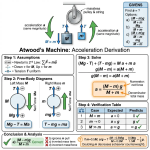
Understanding the Conceptual Framework
The first step in tackling any advanced scientific problem is identifying the underlying principles. In the past, this meant cross-referencing multiple chapters to find the right law—be it Newton’s Second Law or the First Law of Thermodynamics. Today, the strategy should involve a "top-down" approach. Start by outlining the known variables and the desired outcome. If the relationship between these variables remains obscure, using a physics ai solver tool can provide an immediate structural breakdown. By observing how a tool categorizes a problem, a learner can re-train their brain to recognize patterns more quickly, which is a skill that remains useful regardless of the technology used.
Common Pitfalls in Modern Learning
A frequent mistake is the "black box" approach—plugging in numbers and accepting an answer without verification. This leads to a superficial understanding that fails during exams or real-world applications. To avoid this, one should follow a rigorous three-step verification process:
True mastery comes from iteration. Once a solution is found, try changing one variable—double the mass or halve the friction—and predict the outcome. This interactive method of learning was difficult to do quickly in the pre-digital age, but it is now accessible to everyone. By treating digital tools as a "tutor on demand" rather than a "shortcut," we preserve the intellectual rigor that defined our own education while embracing the speed of the 21st century.
In conclusion, the goal of lifelong learning is to stay curious and capable. While the methods of the past built our foundation, the tools of the present allow us to build higher and faster. Embracing this synergy ensures that the pursuit of knowledge remains an engaging and rewarding journey for every generation.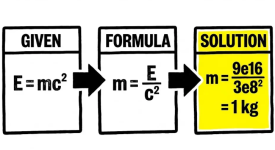
The transition from manual calculation to digital assistance isn't about replacing the cognitive effort; rather, it is about optimizing the way we understand the "why" behind the "how." When faced with a multi-layered problem in mechanics or thermodynamics, the primary obstacle is often not the math itself, but the conceptual leap required to set up the initial equations.
Understanding the Conceptual Framework
The first step in tackling any advanced scientific problem is identifying the underlying principles. In the past, this meant cross-referencing multiple chapters to find the right law—be it Newton’s Second Law or the First Law of Thermodynamics. Today, the strategy should involve a "top-down" approach. Start by outlining the known variables and the desired outcome. If the relationship between these variables remains obscure, using a physics ai solver tool can provide an immediate structural breakdown. By observing how a tool categorizes a problem, a learner can re-train their brain to recognize patterns more quickly, which is a skill that remains useful regardless of the technology used.
Common Pitfalls in Modern Learning
A frequent mistake is the "black box" approach—plugging in numbers and accepting an answer without verification. This leads to a superficial understanding that fails during exams or real-world applications. To avoid this, one should follow a rigorous three-step verification process:
- Dimensional Analysis: Always check if the units in your final answer match the expected physical quantity. If you are looking for force, your result must be in Newtons (kg⋅m/s2kg \cdot m/s^2kg⋅m/s2).
- Order of Magnitude Estimation: Before looking at a precise digital result, make a rough guess. If your calculation suggests a car is traveling at the speed of light, you know there is an error in the input.
- Step-by-Step Logic Audit: When using digital assistants, focus on the intermediate steps provided. If a step seems to skip a logical deduction, that is exactly where you need to open your textbook and dive deeper.
True mastery comes from iteration. Once a solution is found, try changing one variable—double the mass or halve the friction—and predict the outcome. This interactive method of learning was difficult to do quickly in the pre-digital age, but it is now accessible to everyone. By treating digital tools as a "tutor on demand" rather than a "shortcut," we preserve the intellectual rigor that defined our own education while embracing the speed of the 21st century.
In conclusion, the goal of lifelong learning is to stay curious and capable. While the methods of the past built our foundation, the tools of the present allow us to build higher and faster. Embracing this synergy ensures that the pursuit of knowledge remains an engaging and rewarding journey for every generation.