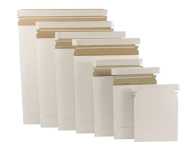
Every cument a business sends out carries its reputation along with it. A signed contract arriving creased and damp, a printed proposal with bent corners, or a set of certificates folded inside an undersized envelope all communicate the same thing: that the sender did not take presentation seriously. Document mailers are the packaging solution that eliminates these problems by providing flat, rigid, and moisture-resistant protection specifically engineered for paper-based materials. From legal firms and financial institutions to print shops and marketing agencies, businesses across every sector rely on document mailers to ensure their materials arrive exactly as intended.
The value of using the right mailer extends beyond simple protection. It affects client perception, operational efficiency, and in some cases legal accountability. When a business sends important correspondence in professional mailing envelopes for documents, it signals that the organization respects both the material it is sending and the person receiving it. This is a standard that more businesses are holding themselves to as competition intensifies and client expectations continue to rise.
This guide explores the full range of benefits that document mailers deliver, covers the different formats available including custom document mailers and eco friendly document mailers, and explains how businesses can select the right solution for their specific shipping volume and document type.
Most document mailers are constructed from either rigid paperboard, corrugated material, or heavy-duty polyethylene. Each material serves a different set of requirements. Paperboard and corrugated formats offer excellent rigidity and are suitable for items that cannot flex at all during transit. Polyethylene formats provide moisture resistance and are lighter in weight, making them cost-effective for high-volume shipping. Both formats are widely used depending on the nature of the documents being shipped and the conditions they are likely to encounter during delivery.
The closure system on a document mailer is one of its most important features. Peel and seal closures allow fast assembly without moisture activation and create a strong bond that shows visible signs of tampering if anyone attempts to open the mailer in transit. This security feature is essential for businesses shipping confidential materials, legal documents, or financial records where chain-of-custody integrity matters.
Understanding these fundamentals helps businesses choose document mailers that match their operational needs rather than defaulting to whatever generic option is cheapest or most readily available.
Documents travel through multiple handling points from sorting facilities to delivery vehicles to loading docks before they reach their destination. Each of these transitions introduces the risk of bending, compression, moisture exposure, or rough handling. A standard paper envelope provides minimal protection against any of these forces. Document mailers are built to withstand them.
Rigid paperboard mailers keep contents flat under pressure by distributing compressive force across the board surface rather than transferring it directly to the enclosed materials. Even when stacked under other packages in a delivery vehicle, a well-constructed document mailer maintains its shape and protects the papers inside. For businesses shipping premium printed materials, certificates, or signed originals, this rigidity is non-negotiable.
Moisture resistance is equally critical, particularly for shipments that travel through regions with high humidity or are exposed to rain during outdoor delivery stages. Polyethylene-based mailing envelopes for documents create a waterproof barrier that paper-based alternatives simply cannot replicate. A set of architectural drawings or a professionally printed proposal that arrives damp and warped represents both a financial loss and a professional embarrassment. The right document mailer prevents this outcome reliably.
For businesses that regularly ship high-value printed materials, it is also worth reading about how peel and seal paper mailers specifically support fast and secure bulk shipping operations, as the closure format plays a significant role in maintaining document security throughout transit.
A neatly sealed document mailer with clean edges, a secure closure, and consistent dimensions communicates order and competence. It tells the recipient that the sender has systems in place, takes quality seriously, and values the recipient's experience. This impression matters in professional services environments where trust and attention to detail are central to the client relationship.
Custom document mailers take this a step further by incorporating brand identity directly into the packaging. A mailer printed with your company logo, brand colors, and contact information transforms a functional shipping container into a branded communication piece. The client receives a package that is immediately identifiable as coming from your business, which reinforces recognition and builds the consistency that strong brands depend on.
The benefit of custom document mailers is particularly evident in industries where multiple vendors compete for the same clients. When two competing firms both deliver proposals to the same decision maker, the one that arrives in a professionally branded mailer with clean construction and a secure closure is more likely to create a favorable first impression. Packaging is not the whole story, but it shapes the context in which the content is evaluated.
For businesses already using branded stationery, extending that branding to the packaging that holds the stationery is a natural and important step. You can explore how consistent branding across document packaging works in practice by reading our guide on how a custom envelope package box enhances branding and protection.
Mailing envelopes for documents that are designed for fast assembly reduce the time each packing operation takes. A mailer with a clean peel and seal strip allows staff to insert documents, peel the backing strip, and seal the envelope in seconds. Multiply those saved seconds across hundreds or thousands of daily shipments and the cumulative time savings become substantial. In a fulfillment environment where labor is one of the largest operating costs, packaging that speeds up the packing process directly reduces overhead.
Document mailers that are sized accurately for their contents also reduce material waste. A mailer that is too large requires void fill to prevent documents from shifting, which adds both material cost and packing time. An accurately sized document mailer requires no additional filling. The document slides in, the closure seals cleanly, and the package is ready for dispatch.
For businesses that have invested in quality packaging solutions across their operation, document mailers represent one of the most impactful areas to optimize. If your business also uses envelope boxes for storing stationery inventory, you can find guidance on managing that aspect of your packaging workflow in our overview of how envelope box packaging can transform your product presentation.
The value of using the right mailer extends beyond simple protection. It affects client perception, operational efficiency, and in some cases legal accountability. When a business sends important correspondence in professional mailing envelopes for documents, it signals that the organization respects both the material it is sending and the person receiving it. This is a standard that more businesses are holding themselves to as competition intensifies and client expectations continue to rise.
This guide explores the full range of benefits that document mailers deliver, covers the different formats available including custom document mailers and eco friendly document mailers, and explains how businesses can select the right solution for their specific shipping volume and document type.
What Document Mailers Are and How They Work
Document mailers are purpose-built packaging envelopes designed to hold flat materials such as letters, contracts, certificates, brochures, photographs, and printed stationery. They differ from standard poly mailers or plain paper envelopes in that they are specifically engineered to keep contents flat, protect them from moisture and physical damage, and in many cases provide tamper-evident security during transit.Most document mailers are constructed from either rigid paperboard, corrugated material, or heavy-duty polyethylene. Each material serves a different set of requirements. Paperboard and corrugated formats offer excellent rigidity and are suitable for items that cannot flex at all during transit. Polyethylene formats provide moisture resistance and are lighter in weight, making them cost-effective for high-volume shipping. Both formats are widely used depending on the nature of the documents being shipped and the conditions they are likely to encounter during delivery.
The closure system on a document mailer is one of its most important features. Peel and seal closures allow fast assembly without moisture activation and create a strong bond that shows visible signs of tampering if anyone attempts to open the mailer in transit. This security feature is essential for businesses shipping confidential materials, legal documents, or financial records where chain-of-custody integrity matters.
Understanding these fundamentals helps businesses choose document mailers that match their operational needs rather than defaulting to whatever generic option is cheapest or most readily available.
Protecting Document Integrity From Origin to Destination
The primary purpose of any document mailer is to keep the contents intact from the moment they are sealed to the moment the recipient opens them. This seems straightforward, but it requires careful consideration of the hazards documents face during a typical shipping journey.Documents travel through multiple handling points from sorting facilities to delivery vehicles to loading docks before they reach their destination. Each of these transitions introduces the risk of bending, compression, moisture exposure, or rough handling. A standard paper envelope provides minimal protection against any of these forces. Document mailers are built to withstand them.
Rigid paperboard mailers keep contents flat under pressure by distributing compressive force across the board surface rather than transferring it directly to the enclosed materials. Even when stacked under other packages in a delivery vehicle, a well-constructed document mailer maintains its shape and protects the papers inside. For businesses shipping premium printed materials, certificates, or signed originals, this rigidity is non-negotiable.
Moisture resistance is equally critical, particularly for shipments that travel through regions with high humidity or are exposed to rain during outdoor delivery stages. Polyethylene-based mailing envelopes for documents create a waterproof barrier that paper-based alternatives simply cannot replicate. A set of architectural drawings or a professionally printed proposal that arrives damp and warped represents both a financial loss and a professional embarrassment. The right document mailer prevents this outcome reliably.
For businesses that regularly ship high-value printed materials, it is also worth reading about how peel and seal paper mailers specifically support fast and secure bulk shipping operations, as the closure format plays a significant role in maintaining document security throughout transit.
Professionalism and Brand Perception in Every Shipment
There is a direct relationship between how a business packages its outgoing correspondence and how that business is perceived by the people receiving it. Document mailers contribute to professional brand perception in ways that are immediately visible to the recipient even before the contents are accessed.A neatly sealed document mailer with clean edges, a secure closure, and consistent dimensions communicates order and competence. It tells the recipient that the sender has systems in place, takes quality seriously, and values the recipient's experience. This impression matters in professional services environments where trust and attention to detail are central to the client relationship.
Custom document mailers take this a step further by incorporating brand identity directly into the packaging. A mailer printed with your company logo, brand colors, and contact information transforms a functional shipping container into a branded communication piece. The client receives a package that is immediately identifiable as coming from your business, which reinforces recognition and builds the consistency that strong brands depend on.
The benefit of custom document mailers is particularly evident in industries where multiple vendors compete for the same clients. When two competing firms both deliver proposals to the same decision maker, the one that arrives in a professionally branded mailer with clean construction and a secure closure is more likely to create a favorable first impression. Packaging is not the whole story, but it shapes the context in which the content is evaluated.
For businesses already using branded stationery, extending that branding to the packaging that holds the stationery is a natural and important step. You can explore how consistent branding across document packaging works in practice by reading our guide on how a custom envelope package box enhances branding and protection.
The Efficiency Advantage in High-Volume Document Shipping
Beyond protection and branding, document mailers deliver meaningful operational advantages for businesses that ship documents in large quantities. Print shops, legal departments, insurance companies, financial services firms, and direct mail operations all handle document distribution at a scale where small inefficiencies multiply into significant costs.Mailing envelopes for documents that are designed for fast assembly reduce the time each packing operation takes. A mailer with a clean peel and seal strip allows staff to insert documents, peel the backing strip, and seal the envelope in seconds. Multiply those saved seconds across hundreds or thousands of daily shipments and the cumulative time savings become substantial. In a fulfillment environment where labor is one of the largest operating costs, packaging that speeds up the packing process directly reduces overhead.
Document mailers that are sized accurately for their contents also reduce material waste. A mailer that is too large requires void fill to prevent documents from shifting, which adds both material cost and packing time. An accurately sized document mailer requires no additional filling. The document slides in, the closure seals cleanly, and the package is ready for dispatch.
For businesses that have invested in quality packaging solutions across their operation, document mailers represent one of the most impactful areas to optimize. If your business also uses envelope boxes for storing stationery inventory, you can find guidance on managing that aspect of your packaging workflow in our overview of how envelope box packaging can transform your product presentation.