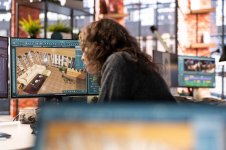
3D Scanning NYC Services for Film and Design
Digital production workflows continue to evolve as filmmakers and designers adopt new technologies to improve accuracy and efficiency. One of the most impactful developments in recent years is 3D scanning. This process captures real-world objects, environments, and human subjects and converts them into detailed digital models.In a production environment where precision matters, 3D Scanning NYC services provide a reliable way to bridge physical and digital workflows. From film production to architectural design, scanning technology supports a wide range of applications.
This article explains how 3D scanning works, its key features, and how it benefits professionals working in film and design industries.
What Is 3D Scanning
3D scanning is a process that captures the shape, dimensions, and surface details of physical objects. Specialized equipment collects data points from an object or environment and converts them into a digital representation known as a 3D model.These models can then be used in software for editing, visualization, or integration into larger projects. The level of detail captured depends on the type of scanning system used and the complexity of the subject.
With 3D Scanning NYC, production teams gain access to advanced tools that deliver accurate and consistent results.
Types of 3D Scanning Technologies
Different types of scanning methods are used depending on the project requirements. Each method offers specific advantages based on accuracy, scale, and application.LiDAR Scanning
LiDAR uses laser pulses to measure distances and generate precise spatial data. It is commonly used for scanning large environments such as film sets, buildings, and outdoor locations.This method is particularly useful for capturing spatial relationships and layout details that are essential for visual effects and design planning.
Photogrammetry
Photogrammetry uses multiple photographs taken from different angles to reconstruct a 3D model. Software analyzes these images and identifies common points to create accurate geometry.This technique is widely used in film production for capturing props, textures, and detailed surfaces.
Conclusion
3D scanning has become an essential tool for film production and design. It provides accurate data, improves efficiency, and supports advanced workflows. From capturing environments to creating digital doubles, its applications continue to expand.By using 3D Scanning NYC services, professionals can enhance the quality and precision of their projects. The ability to integrate real-world elements into digital workflows offers significant advantages in both creative and technical aspects.
Scheimpflug supports these needs by providing reliable scanning services along with a wide range of production equipment. Their approach focuses on accuracy, consistency, and dependable service for film and design professionals.